
Purogene — stabilized chlorine dioxide for stored water
Keeping stored drinking water drinkable, and sanitizing the tank it sits in.
Authorized ResellerEPA Reg. No. 9804-5Ships from our own stock
- Made by
- Bio-Cide International, Norman, Oklahoma
- Sold by
- Exact Sales LLC — We are an authorized reseller. Stock ships from our own inventory.
- EPA Reg. No. 9804-5
- Registered for sanitizing potable water storage tanks and for controlling slime and odor in stored potable water. Approved label
- On this page
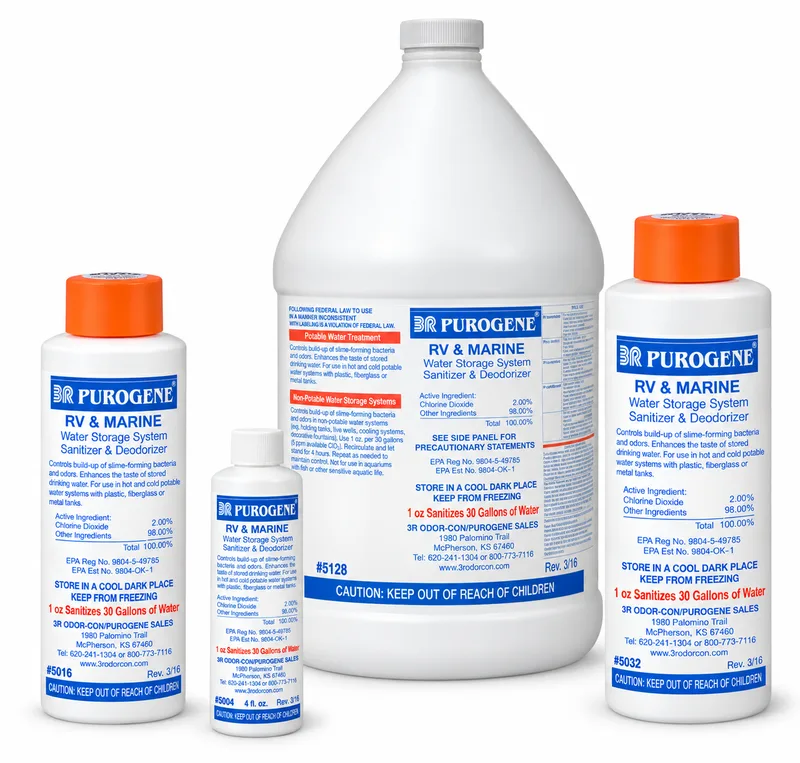
- 3 products, in stock now
The Purogene Line
From $16.95 per unit. Ask about a case
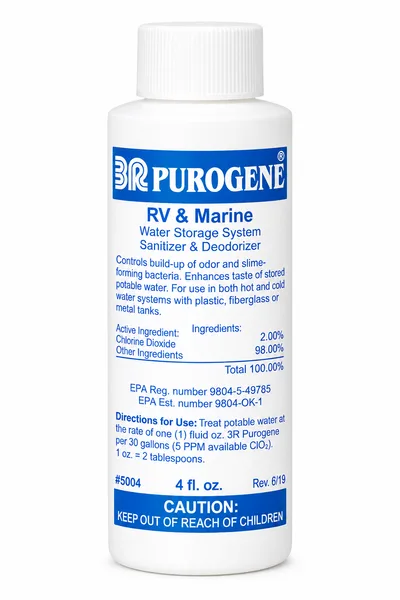 Save $13.00
Purogene
Purogene Drinking Water Preserver — 4 oz
4.6110 ratings on Amazon
In stock, ships today
$16.95List $29.95
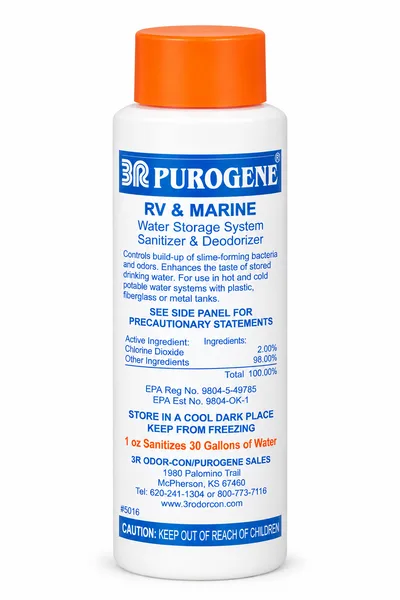 Save $31.00Best seller
Purogene
Purogene Drinking Water Treatment — 16 oz
4.766 ratings on Amazon
In stock, ships today
$28.95List $59.95
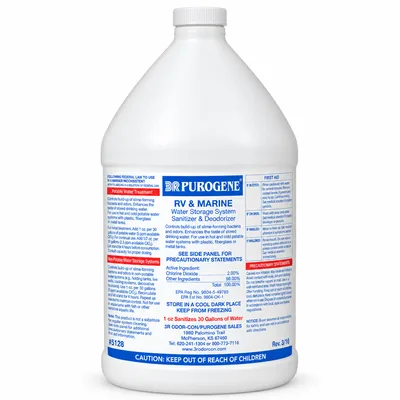 Save $20.00
Purogene
Purogene Water Treatment Preserver — 128 oz
4.437 ratings on Amazon
In stock, ships today
$89.96List $109.96
Common Questions
- How much Purogene per gallon?
- One fluid ounce per 30 gallons to keep stored water drinkable — 5 ppm available chlorine dioxide. Sanitizing a tank is a different, stronger procedure; the calculator does both.
- How long does a bottle last?
- A 16 oz bottle treats 480 gallons of stored water, or sanitizes a 50 gallon tank. A 128 oz treats 3,840 gallons.
- Citric acid or the supplied activator?
- The sanitizing procedures on the label call for citric acid as the activator, at a quarter cup per 50 gallons of tank capacity for the one-hour method.
- How long does treated water stay drinkable?
- Five years, sealed and stored properly. That is what the product is for: water put away now and forgotten until it is needed, rather than rotated every six months.
- Does it make the water taste of chlorine?
- No. Chlorine dioxide is a different chemical from chlorine despite the name, and it does not leave the taste. That is why US municipal systems have treated drinking water with it since 1944.
- Purogene or household bleach?
- Bleach is what most tank instructions still say, and the alternatives usually offered beside it — vinegar, baking soda, hydrogen peroxide — come with a caveat from the people recommending them: they do not work as well unless heated. Purogene is registered for this exact job, at a stated strength and a stated contact time, which is the part a caveat cannot replace.
- Is it safe for drinking water?
- It is registered with the EPA for sanitizing potable water storage tanks and for controlling slime and odor in stored potable water, under Reg. No. 9804-5. Use it as the approved label directs — the label is linked above and every figure on this site is restated from it rather than improved on.
- Where to buy it
- Here, by the bottle or by the case. For a case, an invoice or terms, use the wholesale form and a person answers.
Buying More Than One
Cases, quotes, a W-9, terms for a school or a lab — ask and a person answers. It is the same person who packs the boxes.